Showing posts with label Beauty. Show all posts

Wednesday, January 16, 2013

Lanikai

If you've been reading for a while, you might remember the pictures from the hike I took up to Lanikai Pillboxes with Nate and a couple of his friends. Since I loved the hike so much and since we had friends with us who had never seen a sunrise in Hawaii, we decided the hike was a must-do activity while we were on Oahu. 


The weather that morning was wet, misty, and overall uncooperative. Rain soaked the trail, rendering it a slippery, muddy, mess that could only be navigated with the help of ropes strung along some small trees by some helpful prior traveler. We scrambled up the hillside to be greeted with a view of mist, mist, and more mist. 


The water was still a lovely crystalline blue, and a few small islands could be glimpsed through the white mist, presenting a pretty, if not astounding, picture. We snapped a few photos, trying to make the best of it.


But just before we turned to make the treacherous slide back down the muddy mountainside, the sun began to illuminate the clouds.


The mist rolled back.


And the sun broke through.


And we were treated an array of pure, awe-inspiring light. 


After a brief break in the clouds, the mist rolled back in, and soft rain began to fall.


We ran and slid back through the mud, giddy and soaked, glad for a brief blessing at dawn.

Tuesday, June 26, 2012

Inspired: Tripod Diaries

I absolutely love these photos by Ashley Herrin of the Tripod Diaries:


Tuesday, April 3, 2012

Living with Lewis: Nature's Lessons

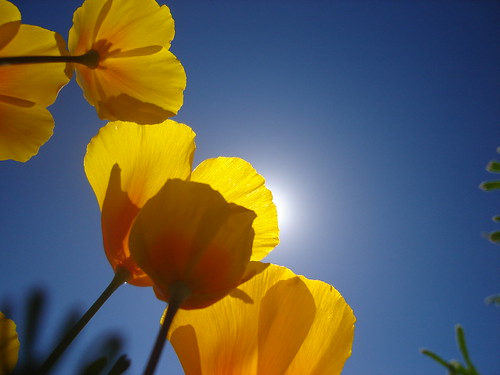
Wildflower Eclipse

"Nature never taught me that there exists a God of glory and of infinite majesty. I had to learn that in otherways. But nature gave the word glory a meaning for me. I still do not know where else I could have found one. I do not see how the 'fear' of God could have ever meant to me anything but the lowest prudential efforts to be safe, if I had never seen certain ominous ravines and unapproachable crags. And if nature had never awakened certain longings in me, huge areas of what I can now mean by the 'love' of God would never, so far as I can see, have existed. . . Nature does not teach. A true philosophy may sometimes validate an experience of nature; an experience of nature cannot validate a philosophy. Nature will not verify any theological or metaphysical proposition (or not in the manner we are now considering); she will help to show what it means" (20).

In this way Lewis cautions us in the love of nature. Nature reflects the one who made it: "the created glory may be expected to give us hints of the uncreated" (20). But while we may see God's character reflected in that which is created, we cannot find him there. We cannot reach God solely through nature- we must turn from the created to the Creator. Nature can point us to God, but it cannot carry us to him. Enjoy the beauty of the created, but direct one's worship the one who made it.

Photo taken by Kara Haberstock, 2008, all rights reserved

Tuesday, March 20, 2012

Living with Lewis: Worship (a follow-up to beauty)

[Note: Read the "Living with Lewis: Beauty" post before reading this post]

There is a second part to this discussion of beauty, a reason that we appreciate beauty, one that again points us back to God and to the nature of love. Lewis writes:
"And now our principle of starting at the lowest- without which 'the highest does not stand'- begins to pay a dividend. It has revealed to me a deficiency in our previous classification of the loves into those of Need and those of Gift. There is a third element in love, no less important than these, which is foreshadowed by our Appreciative pleasures. This judgment that the object is very good, this attention (almost homage) offered to it as a kind of debt, this wish that it should be and should continue being what it is even if we were never to enjoy it, can go out not only to things but to persons, When it is offered to a woman we call it admiration; when to a man, hero-worship; when to God, worship simply" (16).
 Our love of beauty teaches us to worship. We learn to see things and pronounce them "very good." We admire, we praise, we feel a burden to extol something, to appreciate it because of its inherent greatness. This is worship. Worship is when we turn to God and declare him good. We speak of his overwhelming greatness, we praise his character, we admire what he has made, we seek the goodness in all that belongs to him. Worship is not something to be done at a particular time with a certain sort of music- it is to be an everyday practice. Look for the beauty around you, soak it in, declare its goodness. Then turn your praise to the One who made those beautiful things. With practice it's not a challenge at all. It becomes quite a bit like breathing.

Living with Lewis: Beauty

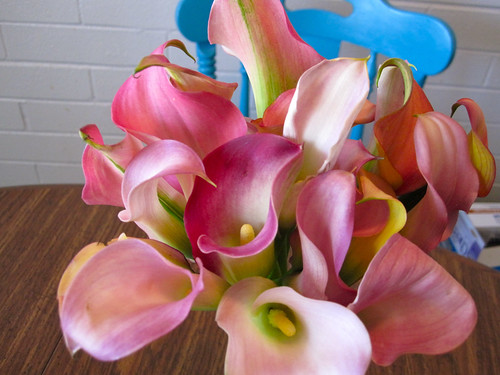
February Flowers

In the first chapter of The Four Loves, Lewis discusses our "Likings and Loves for the Sub-Human," the things we like, the pleasures we take, and beauty we appreciate. He starts off by distinguishing between "need-pleasures" (things we take pleasure in because we need them- like a cold glass of water on a hot Arizona summer day- that do not hold much inherent value or beauty in themselves) and "pleasures of appreciation" (things we appreciate for their inherent beauty apart from any usefulness- like fresh flowers). And when speaking of appreciative pleasures, Lewis begins to discuss our concept of beauty:
"The objects which afford pleasures of appreciation give us the feeling- irrational or not- that we somehow owe it to them to savour, to attend to and praise them. . . in the Appreciative pleasures, even at their lowest, and more and more as they grow up into the full appreciation of all beauty, we get something that we can hardly help calling love and hardly help calling disinterested, towards the object itself. It is the feeling which would make a man unwilling to deface a great picture even if he were the last man left alive and himself about to die; which makes us glad of unspoiled forests that we shall never see; which makes us anxious that the garden or bean-field should continue to exist. We do not merely like these things; we pronounce them in a momentarily God-like sense, 'very good'" (14, 16).
What do you pronounce "very good"? What do you find beautiful?

Walking the halls of the Эрмитаж (L' Ermitage) in St. Petersburg amongst the paintings of the master artists of numerous centuries created an overwhelming appreciation of their beauty in my heart. Watching the sunrise at 4 a.m. and glint off the creamy white buildings and red roofs over the canals with wrought iron and cobblestone bridges was perhaps the definition of gorgeous.

The sunset over the mountains here in Tucson and the moment with the Catalinas turn all shades of purple and red gives an incredible glimpse of nature's beauty. Those nights when the sky is clear and chunks of rocks are raining down above the earth creating fiery trails that we call "shooting stars"- that is marvelous.

The trees I always walk beneath on my way home from class that have just budded out with brand new green leaves that shimmer in the sunlight are stunning in their simple elegance. The tulips that are growing in the little pot on my kitchen table and any day now will burst forth in colors of pink or purple and release that beautiful fresh smell that new flowers do- those are very good.

There is so much beauty all around us. I try to document just a little bit of it on this blog. But I hope that this week you take some time to sit in the "pleasures of appreciation" that surround you. Take joy in beautiful things, and give thanks.


All photos taken by Kara Haberstock, February 2012, all rights reserved